



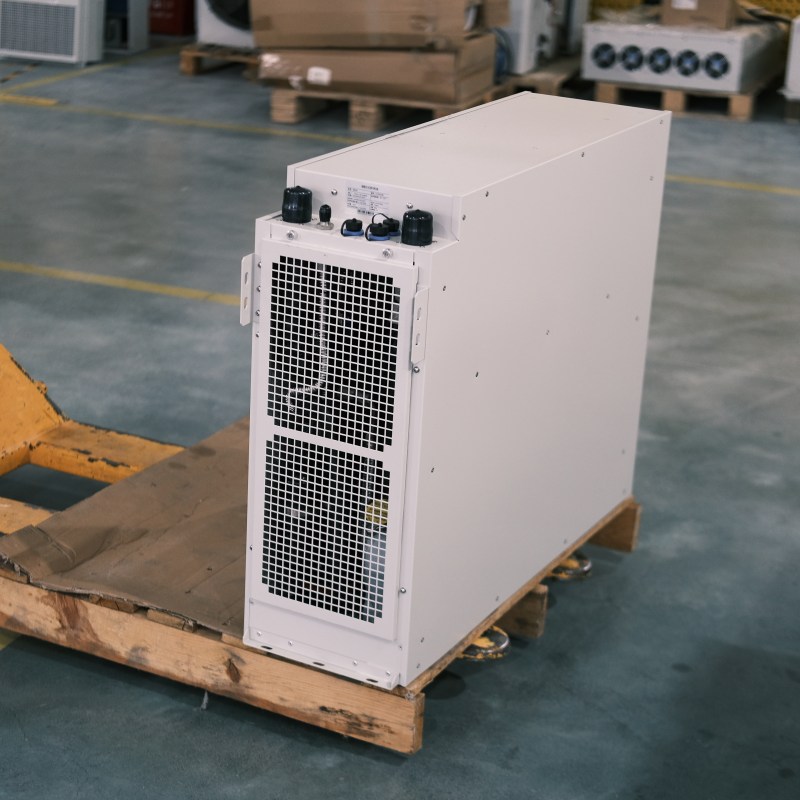
Liquid Cooling System for BESS (Battery Energy Storage) | JXCooling
JXCooling Liquid Cooling Systems for BESS are designed to deliver high-efficiency, precise thermal management for liquid-cooled battery racks in energy storage containers and rooms. By circulating coolant through battery cold plates and a centralized cooling unit, the system removes heat quickly and maintains stable cell temperatures—helping improve safety, performance, and battery life during charge/discharge cycles.
Compared with air cooling, liquid cooling offers higher heat transfer efficiency, better temperature uniformity, and a more compact solutio
n for high-density energy storage. It is especially suitable for applications requiring tight temperature control, high power operation, and stable performance in extreme ambient conditions.
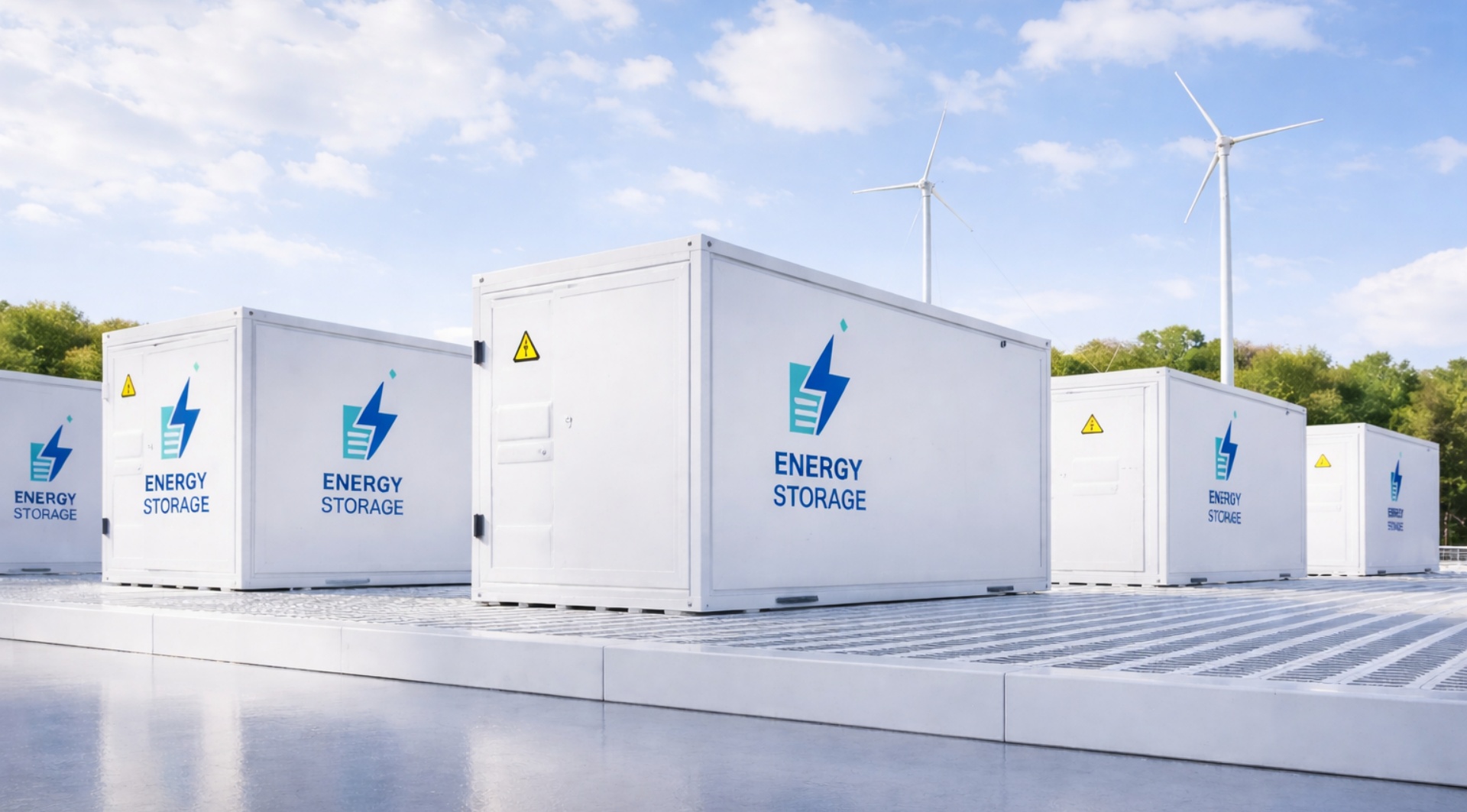
Why Liquid Cooling for BESS?
Fast heat removal for high C-rate charge/discharge and high-density racks
Better temperature uniformity across cells and modules (reduced hot spots)
Higher energy efficiency with optimized pump/fan control strategies
Scalable architecture for modular expansion (rack → container → station)
Improved reliability with monitoring, alarms, and protective interlocks
System Architecture (Typical)
A complete JXCooling BESS liquid cooling solution can include:
1) Cooling Unit (CDU / Integrated Cooling Module)
Variable-speed pumps, valves, filters
Plate heat exchanger (or direct refrigerant-to-liquid module, per design)
Expansion tank, air separator, and pressure management
Control system with alarms and remote communication
2) Heat Rejection Side
Air-cooled chiller or liquid chiller
Dry cooler (free cooling option) for energy saving in cooler seasons
Optional hybrid solutions to optimize annual energy consumption
3) Rack & Distribution Network
Manifolds, quick connectors, insulated piping
Battery cold plates / liquid channels
Flow balancing and zoning for multi-rack systems
4) Safety & Monitoring
Temperature sensors (supply/return), flow sensors, pressure sensors
Leak detection and drip tray monitoring (optional)
Fault alarms and emergency shutdown logic (E-stop linkage)
Key Features
Precise temperature control to support battery consistency and stability
Smart control & monitoring: real-time status, alarms, and remote integration
Energy-saving strategies: variable-speed control, free cooling-ready design
Service-friendly design: modular pumps/filters, easy maintenance access
High reliability: protection logic for low flow, over/under pressure, over-temp, sensor faults
Flexible integration: compatible with mainstream liquid-cooled racks and container layouts
Communication (Typical Options)
RS485 / Modbus-RTU (common for station integration)
CAN / Ethernet (optional, project-based)
Dry contact alarms (optional)
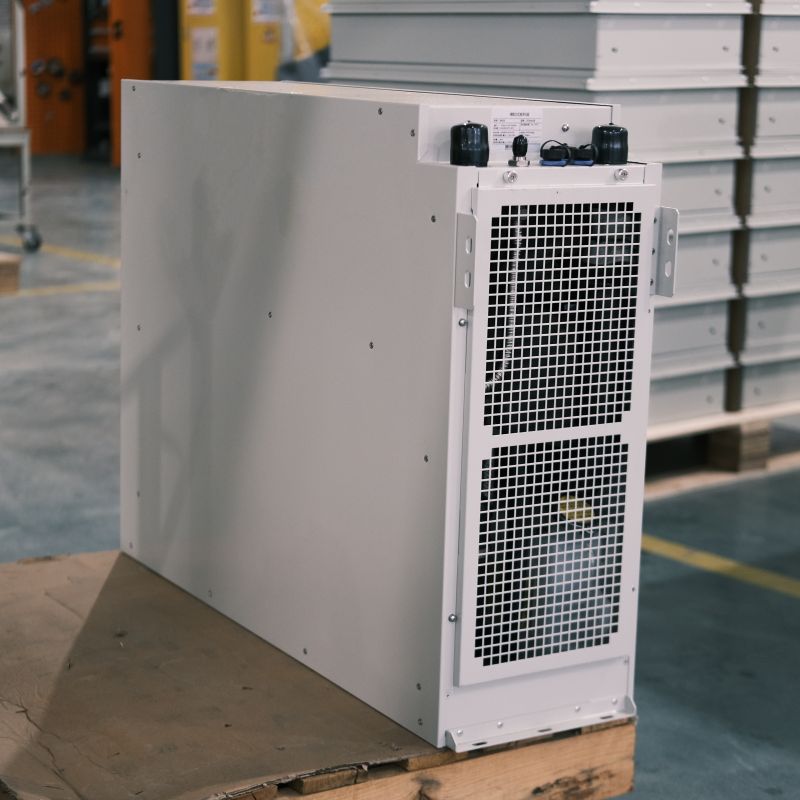
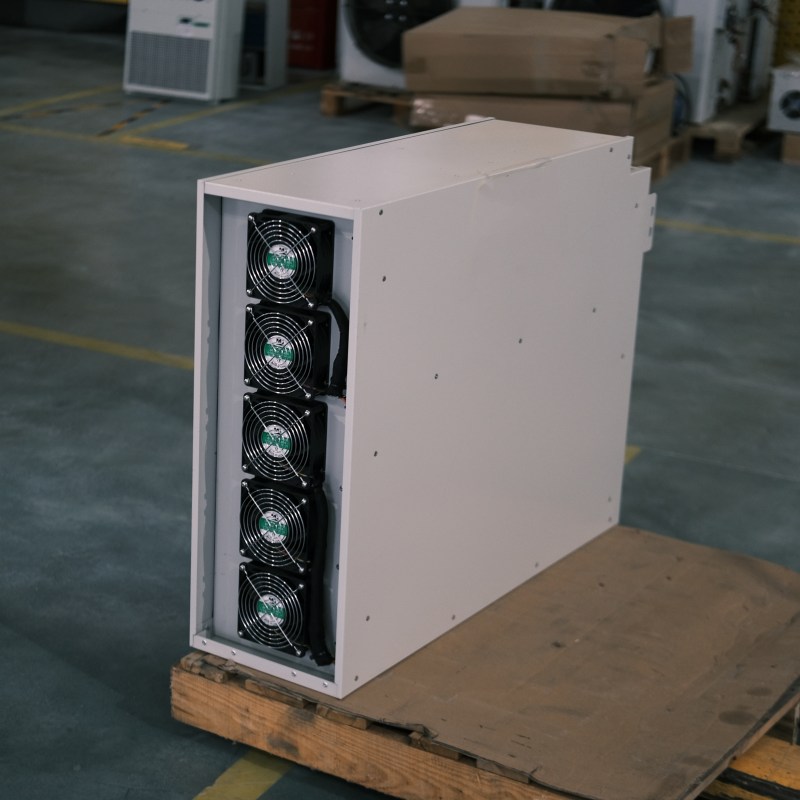
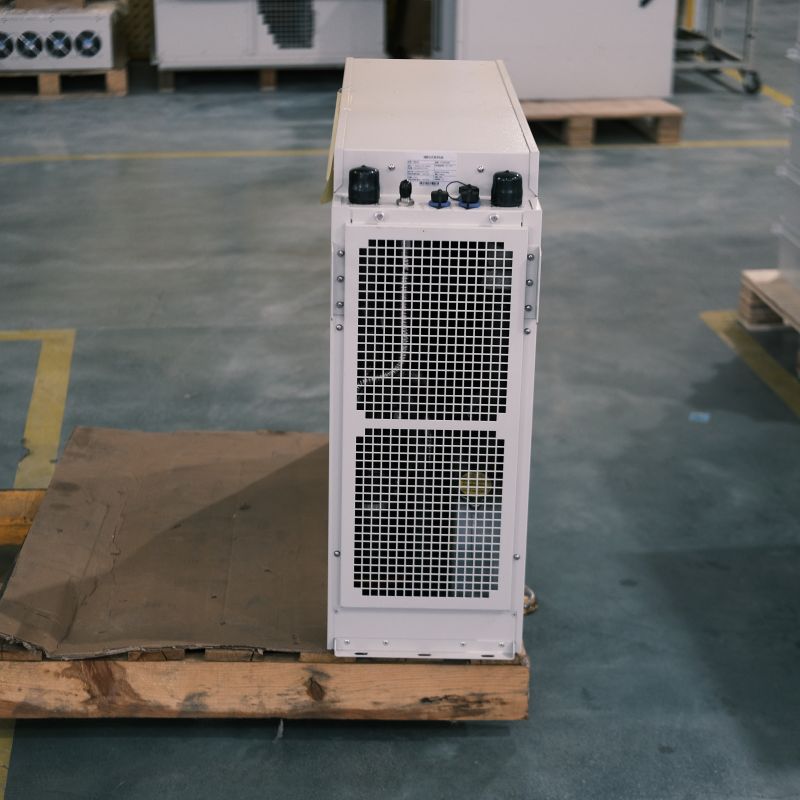
Product Photos
Applications
Containerized BESS (20ft/40ft battery containers)
C&I energy storage (factories, microgrids, peak shaving)
Grid-scale storage stations
Hybrid renewable sites (PV + storage, wind + storage)
High-temperature regions or high power cycling projects where air cooling is challenged
How It Works
Coolant absorbs heat from battery cold plates inside each rack
Warm coolant returns to the CDU/cooling unit
Heat is transferred to the chiller/dry cooler system
Conditioned coolant is pumped back to racks at controlled temperature and flow
The controller continuously adjusts pump speed, valve position, and cooling capacity to maintain the target setpoints
Selection Guide (What We Need From You)
To recommend a system configuration, please share:
Total battery capacity (kWh/MWh) and rack/module layout
Heat load profile (peak/average) and charge/discharge strategy
Target coolant supply temperature range and control tolerance
Ambient conditions (summer peak / winter low)
Preferred architecture: chiller / dry cooler / hybrid
Redundancy requirement (N+1 pumps, dual loops, etc.)
Communication protocol preference (RS485 Modbus, CAN, Ethernet)
Installation & Commissioning Notes
Plan piping routes to minimize pressure loss and ensure balanced flow
Use proper insulation to reduce condensation risk on cold lines
Include shutoff valves, service ports, and drain/fill points for maintenance
Follow recommended coolant type and quality control (filtration, corrosion protection)
Perform pressure test, leak test, flow verification, and control loop tuning during commissioning
FAQ
Can liquid cooling replace container air conditioning?
Liquid cooling manages battery/rack heat very efficiently. Depending on container design, an additional HVAC solution may still be used for auxiliary rooms or to control container air temperature/humidity.
Do you support free cooling?
Yes. Dry-cooler or hybrid solutions can reduce chiller runtime and improve annual efficiency in suitable climates.
Can you customize for different rack brands/layouts?
Yes. JXCooling supports project-based design for manifold layout, flow zoning, control logic, and communication integration.
Request a Solution / Proposal
Send your container/rack layout, heat load profile, ambient conditions, and target temperature range. JXCooling will propose a suitable BESS liquid cooling architecture (CDU + chiller/dry cooler), including recommended redundancy, monitoring interfaces, and installation guidance.